
Reconciliation helps in identifying accounting errors, fraud, and other discrepancies. It is a crucial step to maintain accurate financial records and to ensure that the business is running smoothly. In this section, we will Bakery Accounting discuss the importance of regular reconciliation and its impact on accounting errors. Cash reconciliation is an essential process for any business that handles cash transactions.
Retail and Manufacturing

Cash over and short is a significant concept in accounting that signifies a variance between a business’s reported figures—from its sales records or receipts—and audited figures. This term is also synonymous with the cash-over-short account, which businesses use to record these discrepancies. Cash over and short plays an essential role mainly in retail and banking industries where handling large amounts of cash is commonplace. The term arises when a cashier or teller mistakenly hands out more or less change than what’s due, leading to either cash being underreported (short) or overreported (over). Over and short accounting errors can have a significant impact on a business’s financial statements. These errors can occur due to various reasons such as human error, fraud, or technical glitches.
Accounting Treatment and Recording
A cash-over-short situation can result from either giving too much change or receiving less than the expected amount in a cash transaction. For instance, if a cashier at a retail store rings up an item for $95 but receives $96 from the customer, the reporting system will display a sales figure of $95 and cash receipts totaling $96. Consequently, the difference ($1) goes into the cash-over-short account, which is classified as an income statement account. Cash Over and Short is an income statement account used to track differences in cash collections from what is expected and what is actual.
Best Practices for Cash Handling
Similarly, if an employee fails to record a transaction, it can lead to a shortage. Companies must accurately classify these discrepancies to mirror their actual monetary performance. Money management companies embody a variety of economic solutions that assist companies optimize their money circulate, liquidity, and monetary operations. These providers might include cash pooling, account reconciliation, payment processing, and liquidity forecasting to enhance effectivity and maximize returns. Money move planning is important in cash administration as it helps businesses anticipate liquidity wants, reduce dangers, and enhance financial well being.


On the other hand, if its balance is on the credit side, it will be presented as miscellaneous revenue instead. Common reasons for cash-over-short discrepancies include human error, employee negligence, or internal tampering. Cashiers or tellers might miscount cash received, record incorrect sales prices, or make other errors that create a disparity between reported sales and actual collections. One what is cash over and short day, while ringing up a sale for a customer purchasing a $95 pair of yoga pants, I mistakenly keyed in the price as $94 instead of $95 by accident.
Overages occur when the amount of cash in the drawer exceeds the expected amount, while shortages occur when the amount of cash in the drawer is less than the expected amount. These errors can have serious consequences for businesses, as they can lead to inaccurate financial statements and potential fraud. In this section, we will explore the causes of Over and Short, from both human error and external factors that can impact cash transactions. The policy might also require that all cash deposits be made within 24 hours of closing and that all cash shortages or overages be reported to a designated manager. By establishing clear policies and procedures for cash management, retail stores can help prevent discrepancies and ensure that all transactions are accurately recorded.
Is cash short and over an expense account?
A cash over and short situation can be just as impactful on banking institutions as in retail businesses. Imagine that a teller at a local bank miscounts cash, resulting in a discrepancy between the recorded transactions and the actual amount of money present. In the context of a banking environment, this issue could manifest as a difference in the balance of a customer’s account or a discrepancy within the bank’s internal records. Understanding the impact of cash over short discrepancies is crucial for investors looking into retail businesses, as this accounting concept can significantly influence a firm’s financial records.
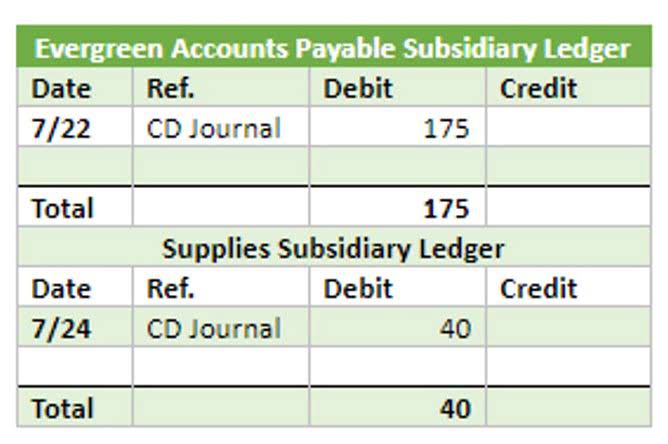
Effective cash management is paramount for accurate financial reporting and operational integrity. Discrepancies inevitably arise when multiple staff members handle hundreds of individual transactions daily, creating a need for standardized tracking. An investment in a money market fund is not a bank account and is not insured or guaranteed by the Federal Deposit Insurance Corporation or any other government agency. Before what to study while analyzing a comparative income statement investing, always read a money market fund’s prospectus for policies specific to that fund. The integrity of accounting records relies on this account to reconcile the physical world of currency with the digital world of sales data. This reconciliation process is a necessary function for any business that deals heavily in physical tender.
As mentioned above, the sales staff or cashier can give too much or too little change to the customer. This difference is treated as income or expense and presented in the income statement. When we give too much change to customers, it means that we make change more than it should be.
- Causes of Cash Discrepancies – Cash discrepancies can be caused by several factors.
- Shaun Conrad is a Certified Public Accountant and CPA examination professional with a ardour for instructing.
- Cash shortage usually happens when the actual cash on hand received from sales is less than the total amount in sales receipts for the retail business.
- By taking these corrective actions, businesses can not only resolve existing cash discrepancies but also prevent future occurrences.
- If overages and shortages are not identified and corrected in a timely manner, it can lead to inaccurate financial reporting, loss of revenue, and even legal troubles.
- When the actual cash balance is more than the expected cash balance, it is referred to as an overage, and when it is less, it is referred to as a shortage.
Can I Hold my account in cash?
- He finds that the box contains $45 of cash and $135 of receipts, which totals only $180.
- It is important to address the issue promptly and take appropriate action to prevent future discrepancies.
- It is, therefore, important for companies to take proactive measures to prevent and detect these errors, as well as to implement corrective measures when necessary.
- Then, create another journal entry debiting the Petty Cash account and crediting the Cash account.
- Empowering students and professionals with clear and concise explanations for a better understanding of financial terms.
In general, the bond market is volatile, and fixed income securities carry interest rate risk. (As interest rates rise, bond prices usually fall, and vice versa. This effect is usually more pronounced for longer-term securities). Fixed income securities also carry inflation risk, liquidity risk, call risk and credit and default risks for both issuers and bookkeeping counterparties. Lower-quality fixed income securities involve greater risk of default or price changes due to potential changes in the credit quality of the issuer. The shortage journal entry is one of many bookkeeping entries used tax withholding estimator in accounting, discover another at the links below. Cash discrepancy is a serious problem that can have significant effects on a business’s financial health.